
NEWS
NEWS
-
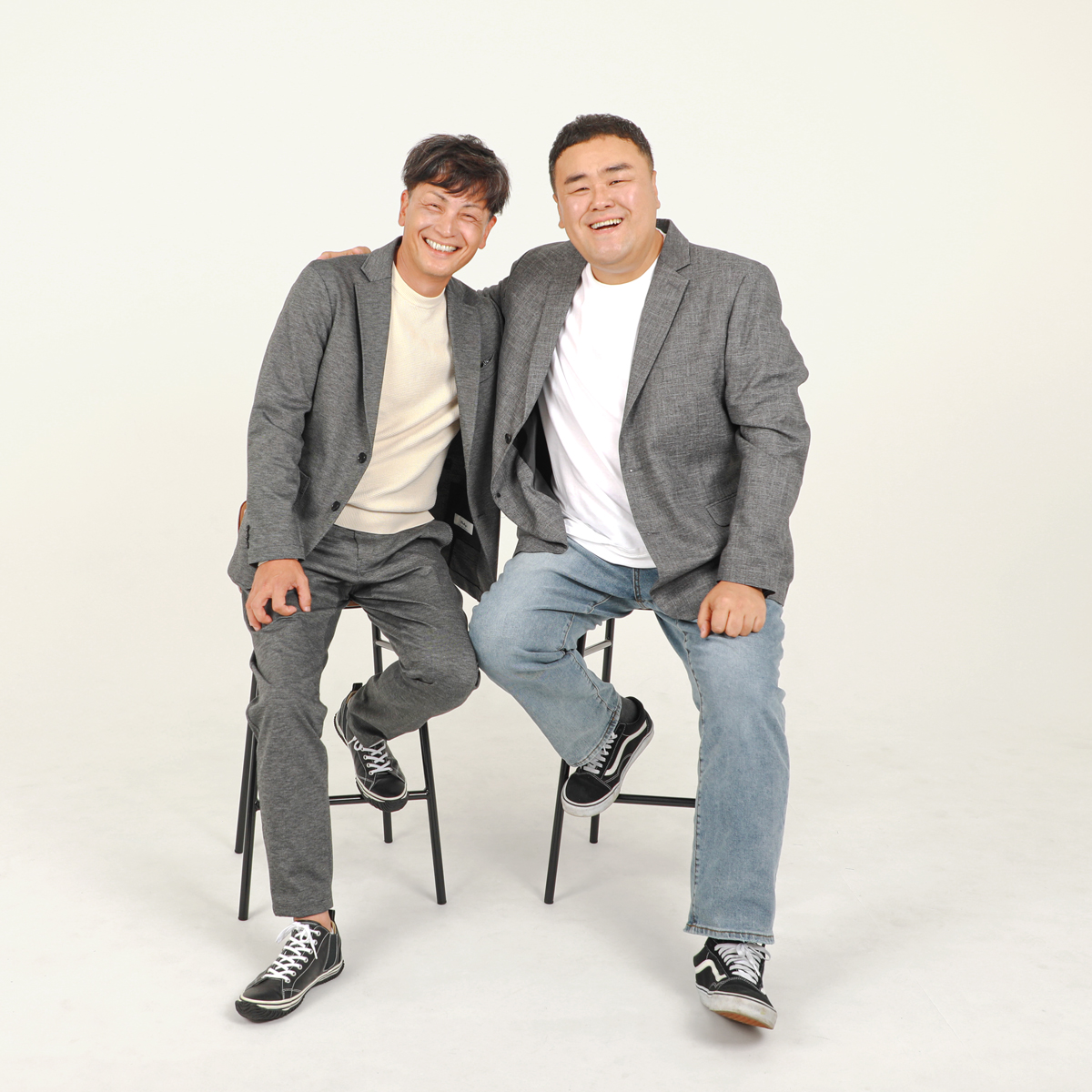 Comprehensive subculture content production company RED DOG CULTURE HOUSE announced on the 30th that it has signed an animation co-production and investment agreement with major Japanese animation studio PIERROT.Founded in 1979, PIERROT is a renowned animation production company that has produced numerous globally beloved TV series and animated feature films, including Magical Angel Creamy Mami, Yu Yu Hakusho, Naruto, Bleach, Kingdom, and Tokyo Ghoul.Over the next three years, RED DOG CULTURE HOUSE and PIERROT plan to produce at least two animation titles through the establishment of production committees in Japan and distribute them to the global market.The first project has been agreed upon as the popular webtoon [Latna Saga: Survival of a Sword King (original story by Lim Kyung-bae, written and illustrated by Kwon Soon-kyu, Studio Khit)], which was produced in-house by RED DOG CULTURE HOUSE, with full-scale production set to begin within this year. The title has already achieved strong commercial success in the global webtoon market through KakaoPage in Korea, Piccoma in Japan, and Tapas in the United States.Following [Latna Saga: Survival of a Sword King], the two companies plan to produce additional animation titles based on either Korean webtoons or well-known Japanese manga.Kiyong Bae, CEO of RED DOG CULTURE HOUSE, stated, “We believe that our collaboration with PIERROT presents an excellent opportunity to showcase the capabilities RED DOG CULTURE HOUSE has built over the years to the global market. Building on this agreement, we will make every effort to strengthen the global fandom of [Latna Saga: Survival of a Sword King], the flagship IP of RED DOG CULTURE HOUSE.”Kazumichi Ueda, CEO of PIERROT, commented, “From our very first meeting with RED DOG CULTURE HOUSE, we were captivated by the quality of its work, the team’s passion, and the originality of its content. We will devote the full capabilities of both companies to ensure that the animated adaptation of Latna Saga: Survival of a Sword King exceeds the expectations of original fans, and we ask for your continued support.”Meanwhile, RED DOG CULTURE HOUSE is the first Korean animation production company to participate in a Japanese animation production committee as both a producer and an investor. This is expected to serve as a clear example of the elevated standing of Korean animation studios in the global market.2024-10-30
 -
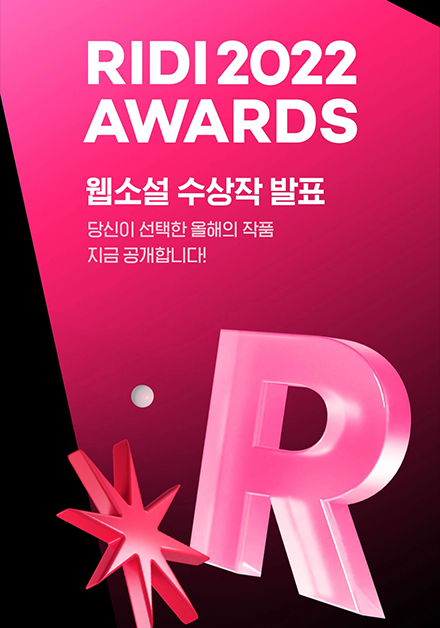 Under the craze and interest on the chivalry genre in 2022, Jung-yeon’s has acquired irreplaceable support by its readers to win the grand prize of RIDI’s Fantasy E-book section. Many fans have been actively and autonomously supporting and promoting during the 1 month voting period; an evidence on how deeply they were attached to . Writer Jung-yeon’s award acceptance speech was revealed on Red Dog Publishing Group’s social media, making 2022’s year end truly meaningful for both the writer and the fans.2022-12-30
 -
![Netflix’s highly anticipated series [Dragon Age: Absolution] has been released...](/uploaded/webedit/2606/8b258510f998380cfc35e03bf956950cd7ab98c1.jpg) Bioware’s global mega hit GOTY game has been reinterpreted into a fascinating animation series to be released on Netflix on Dec 9th 2023.A thrilling story with strong romance, stirring action packed with exciting music, accompanied by a fascinating visual beauty!This animation masterpiece has it all, and global fans and the press are now paying close attention to Red Dog Culture House’s next move.I46Also, due to the successful production of , Red Dog Culture house has expanded its partnership with Netflix with a multi-production deal, meaning that it will introduce more animation works on Netflix.Pay attention to Red Dog Culture House, continuously evolving to become a globally influencing animation studio[Denise Petski, “Red Dog Culture House Inks Series Production Deal With Netflix, DEADLINE, December 7, 2022 4:00PM, https://deadline.com/2022/12/red-dog-culture-house-series-production-deal-netflix-animated-series-1235190875/]2022-12-09
Bioware’s global mega hit GOTY game has been reinterpreted into a fascinating animation series to be released on Netflix on Dec 9th 2023.A thrilling story with strong romance, stirring action packed with exciting music, accompanied by a fascinating visual beauty!This animation masterpiece has it all, and global fans and the press are now paying close attention to Red Dog Culture House’s next move.I46Also, due to the successful production of , Red Dog Culture house has expanded its partnership with Netflix with a multi-production deal, meaning that it will introduce more animation works on Netflix.Pay attention to Red Dog Culture House, continuously evolving to become a globally influencing animation studio[Denise Petski, “Red Dog Culture House Inks Series Production Deal With Netflix, DEADLINE, December 7, 2022 4:00PM, https://deadline.com/2022/12/red-dog-culture-house-series-production-deal-netflix-animated-series-1235190875/]2022-12-09 -
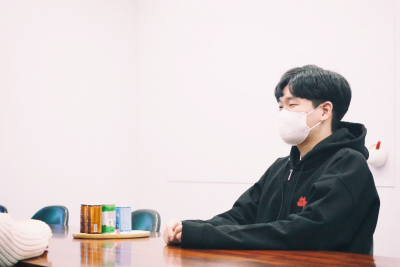 As more and more webnovel-based webtoons come out, some creatives are voicing concerns. The biggest worry is that a webtoon may be considered just an accessory to the original. And yet, here is an artist who integrates just the right amount of his unique color into the original and is getting a great response from his readers. Today, we will be speaking with Artist Soon-Q, the creator behind 'Latna Saga: Survival of a Sword King' in collaboration with Studio KHIT. Here is Artist Soon-Q as he gives us his honest thoughts about his work and life.Q. How did you start drawing webcomics?I was in middle school when I first thought about drawing webcomics myself. I got into webcomics through 'Doraemon', and throughout middle school, I kept thinking, ‘I want to make others feel what I felt watching animation and webcomics as a child.’ A part of me also wanted to show webcomics through my own work, not just introduce people to webcomic. Actually, I also briefly considered writing novels instead. But I decided webcomic is better because it is visual by nature. Also, when I was young, I thought only a smart person could draw webcomics (laughs) So my conclusion was that I could! Because I believed I was smart. (laughs) Of course, reality turned out a little differently.Q. When did you decide to become a professional webcomic artist?Ever since I was in middle school, I kept telling my friends, ‘I am going to be a webcomic artist!’ However, for various reasons including how my parents were against it, I focused on my studies instead in high school and even attended the first year of college. But I dropped out after I finished my compulsory military service. Then I put all my effort into practicing drawing webcomics thinking, ‘This is all I have now’. I bought a tablet with the money I saved up while working part-time in package delivery and took classes in webcomic at an afterschool academy. Meanwhile, my family fell on hard times during that period, and so my friends were helping me out with everything a huge deal. So that’s how it was for a while – I just kept preparing towards my goal one step at a time.Then I met a great teacher and gained around 2 years of experience as an assistant. I also built up my experience with manuscripts. Then I joined the Busan Webtoon Center, worked on my own manuscript, and participated in a mentoring business. I posted a test manuscript onto a community website. In my eyes, that manuscript was too good not to share with others. Then someone at Red Dog Culture House discovered it and contacted me. That is how I came to work on 'Latna Saga: Survival of a Sword King' with Studio KHIT. It’s my debut work, and I yet I got to be the main artist for it.Q. Were you writing your own original story before you joined serialization of 'Latna Saga: Survival of a Sword King'?When I first began drawing webcomic, I had no thoughts about making a novel-based webcomic. I liked robot webcomics and mecha works like , and I wanted to write my own original webcomic in that genre that would move people the way those moved me. But once I entered the market, I saw the stark reality. I concluded it’d be hard for me to make what I want right now in our country. So, I adjusted my direction. But in the end, the core of what I like is the ‘story’ that was underneath the ‘robot webcomics’. So, when I say I adjusted my direction, I mean I set the focus of my studies on storytelling, to make good plot structures.So, when I first got the offer to serialize, I rejected it because I was working on my own webcomic. And then I worked on that webcomic’ story for a month, but nothing came out. That’s when I thought, ‘Let’s just start working no matter what the work it is.’ Working would mean I am finally entering the arena, playing the real game at least. Working will force me to keep contemplating how to make my story sell well, which means better stories will come out. I thought I will improve as a webcomic artist if I just keep pushing myself this way.Not that I had a strong conviction. Rather, I thought I’ll be forced to find a way to survive if I just pushed myself to my very limit. That’s how began.Q. You mentioned that your parents were strongly against your dream. Tell us more.I was quite a good student in middle school and high school. I even studied at a gifted education institute during elementary school and middle school. From my mom’s point of view, it was not that I can’t do well in school – it was that I was choosing not to. In high school, I was quite negligent with my studies because I had started to draw webcomics. I applied to college thinking I just won’t go to college at all if I don’t get in this time. However, I ended up getting accepted to college at the top of my class as a physics major. But the report card my mom received when I had just gone into my compulsory military service was all F. I had not even gone to take my exams.My mom and I talked this out on the phone because I was in the military at the time. She had wept a lot after seeing my report card. She must have been so frustrated to see her son get into college at the top of his class - with a scholarship to boot! - but then slack off. However, I told her my side of the story calmly. Well, because we weren’t talking in person (laughs).I had conviction about my decision then. Sure, I could graduate with a physics major, get a job, and earn some form of living. But I was certain that right now, with our family fallen on difficult times, the quickest way for me to take care of us as the eldest in the family would be to draw webcomics. I don’t think I could have told my mom all this if she was right in front of me, crying. But since we were apart, I managed to tell her, ‘I’m going to start drawing webcomics as soon as I’m done with my compulsory military service.’ Later, my mom did tell me, ‘I’m sure you can succeed. Just work hard.’The unfortunate thing is that my dad passed away right before I debuted. He passed away while I was in the webtoon center…He never got to see my debut. That’s the most regrettable thing for me. During high school and college, even when my mom was still against my dream, my dad would say, “Hi there, artist Kwon. How’s your webcomic going lately?” He was understanding of my goal. If he had seen me debut and watched me draw for my series, he would be going around proudly telling everyone he knew about it.Q. Let’s begin talking about the webcomic itself. Please introduce 'Latna Saga: Survival of a Sword King'.This is a webtoon based on a novel by Kyung-bae Im. The webcomic adapts the story and gives flesh to the characters with drawing and acting. I am in charge of adapting the story and drawing. Studio KHIT under Red Dog Culture House handles the coloring, background illustrations, effects, etc.Q. People often think of ‘webtoon’ as the work of an individual creator while they think of ‘production’ as the work of a studio with no single creator behind it. How is 'Latna Saga: Survival of a Sword King' being made?I’m sure our process is similar to what’s behind any webcomics. But the difference is that this webcomic does leave my hands in the middle of the process. Even while we’re in the storyboard phase, I have long phone calls with the producer at Studio KHIT to discuss the storyline when I’m creating the storyboard based on the novel. Once the studio and I both agree that the storyboard is entertaining, I go into the drawing phase.Once I finish the sketches and the linework, we enter the coloring and background work phase. By then, I already have the direction figured out, so I send my directing notes and references to the studio. The studio then sends me back the 1st draft of the manuscript. At that point, we revise certain parts of direction, etc. Sometimes we go with what the studio made because it is better than what I had in mind. Once the manuscript gets the green light, we go into serialization. Since weekly serialization imposes limits on time, the highest number of exchanges has been two per episode, I think.It’s a ‘collaboration’ with Studio KHIT but we do move as one body. It’s both Studio KHIT’s work and my work. At first, I was too ambitious. I once tried to do the coloring myself as well. But it was simply unfeasible to meet the deadline. That’s when I realized that on my own, I could never create something at this level. Studio KHIT also promised they will match the quality of our webcomic to whatever high quality I have my mindset on, and they certainly kept their promise. It hit home for me that a studio’s system could be a great support if your work has competitors to win against or you’re working solo. The biggest realization was how I could never do this alone. If my work will be competing against other works but I know it will lose, I won’t do it. I don’t want to do that type of gambling.Q. What is your top priority when creating a webcomic?This may sound materialistic (laughs) but it’s ultimately for my work to sell well. That’s the most important ideal for to attain. As an individual creator, I think of this as a test to see if I can make it as a commercial creator. My belief is that the ideal for a commercial creator is to give the world a product that meets the needs of the readers of that genre. So ultimately, the most important factor is how entertaining it is. An objectifiable entertainment.Even from a personal point of view, I think what’s important is how entertaining it is. If a webcomic is not fun, my belief is that it will read like a textbook. Philosophies and value systems will naturally melt into the work on their own as long as I’m a decent person. So first, the goal is to make it entertaining. If I’m lacking in some ways, what happens will be an opportunity for growth. If I have something real to give to my readers right now, it will come out in the work.Q. Both the original novel and the webtoon are unique. The story is an otherworld fiction, but it has characteristics of both the hunter genre and the holy seat genre. What were some challenges you faced turning a multi-genre story into a webtoon?I didn’t know that much about genre fiction before. So, I wasn’t very knowledgeable about the elements of many different genres in . But counterintuitively, I think my unfamiliarity with fantasy helped me take it in as a new original story and study it as such. Strategically speaking, again, my sole focus was on whether I find the story entertaining or not. But grammar functions differently between novels and webcomics so I came up with various ways to fill in the gaps between these two forms of media.Webcomic is more compact in comparison, so I wanted to raise the tempo of the story a bit. Right when I was in that line of thought, the producer from Studio KHIT called and said we should split an episode into two. We put a lot of effort into pulling out elements of the original novel and adding all that makes webcomic so fun.Q. It must have been challenging to turn a story from an unfamiliar genre into a webtoon.I thought I would eventually run out of directing creativity because this is a munchkin genre (Note: Genre in which the protagonist is extraordinarily powerful to the point it threatens the very balance of the world it occupies). Some readers enjoy having a munchkin protagonist from start to end, but that’s not satisfying for me. I wanted to strategically change up the story and give it a character arc, an element of coming-of-age. So, I did things like bringing in early some characters who only appear later in the original novel and provide possibilities for the protagonist to grow all the while maintaining the original protagonist’s identity as a ‘munchkin’. These efforts are especially evident in the Zhang Ruxin and Leonhart episode. Aside from that, I added humor, etc. to make it more fun to read.Q. You use humor very effectively on its own, but you also make it a tool to draw the reader into the deeper story. Where do you place your moments of comic relief?All the moments for comic relief get decided while I’m putting the plot together. You break down a story into the 5 elements of plot with exposition-rising action-climax-falling action-resolution, my view is that humor can be added in the exposition-rising action part. Comical moments after the climax take readers out of the story in many cases.Of course, there is no correct answer because it depends on each episode. And the concept of an episode is slightly different from the overall plot structure I mentioned. In the end, the biggest determinant of whether I add humor or not is whether it’s entertaining. If there is too much information and explanation, readers are just going to end up with a headache. I use humor when I need the readers to be moved.‘Moving’ the reader can be interpreted in a lot of ways. There would be no need to make it more moving if a character that readers had grown attached to has just died. An incredible action sequence would also do the job just fine. But if an episode’s structure does not include any such parts, I’d add the humor. I think it’s important to be prepared in advance to add humor. Preparing could mean setting up a comical situation around the protagonist or placing a side character who would respond to that humorous moment. So, I guess humor could be seen as my last safety catch. (laughs)Q. What the writer finds entertaining versus what the reader finds entertaining could be different. How do you prepare your comic relief moments and how do you express them?My view is that humor is somewhat set in stone. There is a finite range of elements that can make people laugh. So, I believe if I just function within that range, I will get most people to laugh. Examples of funny moments would be something the reader knows in real life popping out of nowhere in the story, or a character’s behavior completely going against their usual character. Those are funny. Rather than design jokes, I use that formula I know about humor. Also, the things I do may only be possible because this series is a not a full-out comedy genre piece.Q. From the reader’s perspective, what would be the greatest charm of 'Latna Saga: Survival of a Sword King'This work won’t waste your time nor money. No episode is ever half-heartedly done. The structure of the whole series is economical, very tightly woven. I think our readers have picked up on that and they are responding well.Q. I recommend this webcomic as the best in the game for adaptation. What are some know-hows for adapting a pre-existing work?The fact that I studied storytelling played the biggest role. I was trying to do my own creative writing before this series. And so, as I adapted the novel, I myself could write parts that needed to be added. That was the most effective tool. Novels and webcomics are different forms of media that pursue different types of entertainment. The original author has already completed the skeleton of the story in the novel. So now, as I transfer that over to a different medium, my goal becomes bringing what only webcomic can bring to the table. That was the most important part of it all.To conclude, my biggest source of insight is to admit that novels and webcomics are different forms of media and to then seek out what webcomics can offer. I used what I found to create a work that readers would enjoy.Q. The most memorable episode for me was Dragon’s Lair episode with the character ‘Elijey’. What inspired you to create a brand-new character who is not in the original novel?The character of Ephyr was meant to become a traveling companion and needed a dramatization. I twisted a certain premise from the original novel. In the novel, a dragon’s human form is derived from what the dragon likes. That made me think, ‘What if what the dragon liked was a person?’ I wanted Ephyr, who is a bright personality at face value, to have a more multi-dimensional identity.Someone she liked has died, and now she must live the rest of her life in the appearance of that person I wanted readers to feel pity for her as well. The character of Ephyr needed to become more multi-dimensional.Q. In the early episodes, the characters seemed exaggerated in their behavior. But as the series went on, they act more naturally. Of course, there is no objective answer to this, but I do wonder how you fine-tuned this aspect of the series.The characters may have seemed quirky at first because I myself was not close and familiar with my characters yet. I also didn’t have enough information on who Han-Bin is and how he would act. I kept asking myself questions such as ‘What does he think about?’, ‘What would make him mad? Make him sad?’ So as the series went on, I was getting to know Han-Bin just as the readers were getting to know Han-Bin. Eventually, it came to the point where I’d think, ‘I know Han-Bin wouldn’t act like this here.’Q. One standout feature is how even though it is based on a webnovel, the webtoon has an original story of its own. You must have needed to make it fun for the novel’s fans while also capturing readers who came for the webtoon. How was it?My line of thought was, ‘Wouldn’t fans of the original novel also expect a slightly different story? Wouldn’t they get bored at some point if I simply repeated the same story?’ So, I wanted to satisfy fans of the original novel with both recognition of the familiar and surprise of the new. As for webtoon readers, as long as I give them good webcomic, I believed they would be satisfied.That’s why I believe the best experience would be to read both the novel and the webcomic. Those who read the novel will find new experiences from webcomic and vice versa. I would like to sincerely thank the original novelist for allowing me to make the series.Q. This series has incredibly charming supporting characters like Zhang Ruxin and Leslie. What goes through your head when you make the supporting characters?When I’m putting a story together, the supporting characters are often the ones carrying an episode’s subject matter on their shoulders. The main character must go through every episode, but a supporting character is there to give life to one episode. They are characters that really shine in specific situations. Leslie and Zhang Ruxin were also characters who were there to make an episode’s subject matter stand out.What I really want to say can only be told through supporting characters, so I grow especially attached to them. It makes me work harder on drawing and writing.Q. What drives you to maintain the high quality of work with every episode?My drive is the pressure and stress for me to always make good works. It’s a given that the skill level needs to be there for the direction and expression to be accurate, and for the artwork to be moving. In webcomic, storyboards play a very important role, and the skill for delivering that storyboard to the reader is the drawing. (If you fail to deliver through drawing) not everything I’m trying to convey to the audience would make it over.I haven’t found a go-to method for managing my stress yet. When I get really stressed, I cry. When I’m just somewhat stressed, my stress will go away on its own once the manuscript comes out well. The majority of my stress is compensated for when I submit a satisfying manuscript. And once it is published and I confirm that readers got everything I had meant to convey, all of my stress disappears.Q. We’d be grateful if you could tell us any new charming characters we’ll be meeting. As long as it’s not a spoiler!As long as it’s not a spoiler…(laughs) I think Baotolt and Hollian’s will have far-reaching impacts on the story. They each have a story structure of their own. They each have a set of charms different from each other. I think an exciting story will unfold thanks to these two, a story that will continue the exciting story of the pre-existing characters.Q. Anyone who’s seen the webtoon, including those who leave comments online, worry about your wrists after seeing how high quality the work is. How is your health?Oh, my health is fine. Thank you for being concerned about me. My wrists, shoulders, and waist are all in good condition. To all artists – please be healthy, everyone. (laughs)Q. How’s the response from overseas?The series launched in Japan and China. From what I’ve heard, the response has been quite good, ranking quite high in the charts. I’m proud of how the work was received well in Japan, the homeland of mangas, of course. Also, there was even someone studying webcomic at the opposite side of the globe who sent me fan art.When I receive gifts like that, I suddenly think, ‘Is this just a very good hidden camera prank by Studio KHIT to lift up my spirits?’ (laughs) Honestly, something I never thought would happen is happening for me right now. So, I feel incredible. I even ponder what fans were thinking when they sent me their fan art. For instance, one of my favorite artists makes non-mainstream webcomic, and that artist may also have never imagined that he has a fan in Korea. Do my fans feel the same way I feel about artists that I like and admire? That thought moved my heart deeply.Q. Ever since the protagonist’s aura transformed, the use of red hues has become a standout feature. Red could be considered the characteristic color of . How do you usually decide on the overall tone of webcomicI didn’t attach too much meaning to the color. Han-Bin seems very beastly (?) though, so once his aura went through a transformation, I wanted the color to be ‘blood that is boiling with passion’. The producer agreed, so we went with it.Q. Will we be seeing this webtoon as a webcomic book or an animation someday?I know the book form is already under in the works. They are making it so that we make the series more accessible to readers. Now, animation is something Red Dog Culture House would have to tell you about. But I have to say, for the animation, my personal hope is that I enjoy it myself when I watch it.Q. Please say a few last words to the readers of 'Latna Saga: Survival of a Sword King'.It was my first-ever webtoon, so it was lacking in many ways, and yet you guys have been reading my work. So, the first thing I want to do is say thank you. I’m working hard to keep creating something readers would not feel is a waste of their time and money. I hope my work is fun to read. I’ll continue working hard to create good webcomic. Thanks.The interview with Soon-Q was a delight. We wish the interview could be longer, but consideration of length and time forces us to be brief. Readers trust in artists who are as stubborn with their vision for their work as they are convicted of their personal philosophies – the trust that this artist will give us one hell of a fun time. Artist Soon-Q is such a creator. We could also sense how Soon-Q feels a weight of responsibility collaborating with Studio KHIT, the studio of ‘critical hits’.2021-01-28
 -
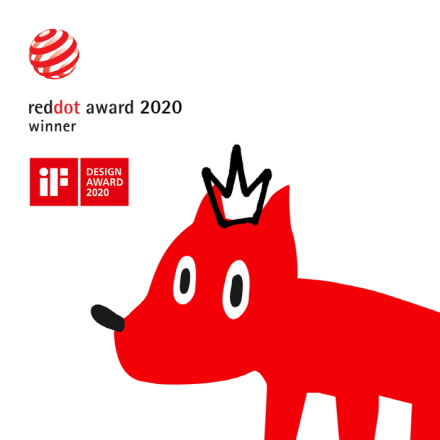 Red Dog Culture House’s CI Renewal Project, which already received a main award from Germany’s iF Design Award back in February of 2020, also won in the category of ‘Brands & Communication Design’ from the Red Dot Design Award! Red Dog is now the recipient of 2 awards from the world’s top 3 design awards. The judges were impressed by Red Dog’s new proposed paradigm of ‘MI (Member Identity)’ in which the company’s in-house artists got to express individuality by each artist designing his or her own character logo. Why not go for a 3rd award? Go get it, Red Dog!2020-07-20


122, Jomaru-ro 385beon-gil, Bucheon-si, Gyeonggi-do, Republic of Korea
+82 (0)32-270-6544

Designed by WebSite.co.kr
Copyright © 2026 Red Dog Culture House Co., Ltd. All Rights Reserved.